Negative Review Recovery: Turning Unhappy Customers Around Automatically
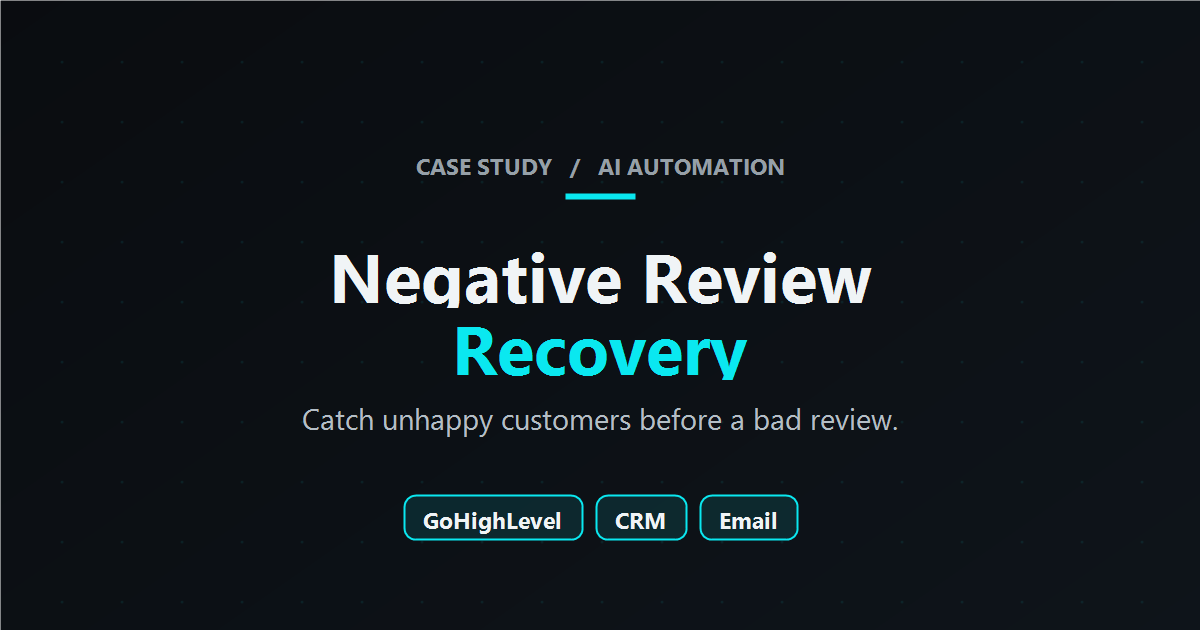
A GoHighLevel workflow that catches an unhappy survey response, apologizes fast, and works the customer back with follow-ups and a tracked opportunity, so a bad experience gets fixed before it becomes a public one-star review.
Problem
One unhappy customer with a phone is a one-star review waiting to happen. Most businesses only find out something went wrong after it is already public, and by then the damage is done and the trust is hard to win back.
The better move is to catch it early. Send a survey after the service, and when someone answers unhappy, get to them fast, before they vent on Google. The trouble is that “get to them fast” almost never happens by hand. The survey result sits in a folder, nobody is watching it in real time, and the window to save the relationship closes quietly.
So the goal was simple: the second a customer flags a bad experience, the recovery should start on its own, and it should not stop until someone has actually made it right.
How it works
The whole thing runs in GoHighLevel and kicks off the moment a contact gets tagged as an unhappy survey response.
It waits one day after the survey comes in, on purpose. A reply that lands too fast can feel automated and cold. A day later reads as a real person who noticed and cared. Then it sends an apology message that owns the problem and opens the door to fixing it.
From there it splits into two paths so the customer’s own behavior decides what happens next.
On the main path, it creates or updates an opportunity in the pipeline so this recovery is tracked like any other deal in progress, not lost in a tag somewhere. It sends a follow-up email, then waits for a response and moves the opportunity along as the conversation develops. Nothing gets forgotten, because the pipeline is now doing the remembering.
The other path handles silence and short replies. If the timeout hits, it sends another email and then checks the reply itself. A condition looks at what they wrote, whether the reply is empty or contains the kind of wording that says they are still not happy, and branches accordingly. When the situation is handled, it removes the unhappy tag and updates the opportunity so the record reflects where things actually stand.
Why it is built this way
The point is not to blast an apology and move on. It is to run a real recovery loop. Waiting a day makes the outreach feel human. Tracking the customer as an opportunity means someone can see, at a glance, who is still upset and who has been won back. And reading the reply instead of assuming means the workflow reacts to what the customer actually says, not just whether they responded.
It also keeps a clean record the whole way through. Every step updates the contact and the opportunity, so the team has a full picture of who was unhappy, what was sent, and how it ended.
Result
Unhappy customers get a fast, personal apology and a real follow-up instead of silence, and the business hears about problems while they can still be fixed. The recovery runs on its own, gets tracked in the pipeline like a deal, and only pulls in a person when it needs one. Fewer bad reviews reach the public, and more upset customers turn back into loyal ones.
Want results like this for your business?
Let's talk about automating your busywork. Book a free 15-minute call.